Door Hanger Printing: 7 Creative Ways Local Businesses Can Get Noticed
By Manny Torres · November 12, 2026
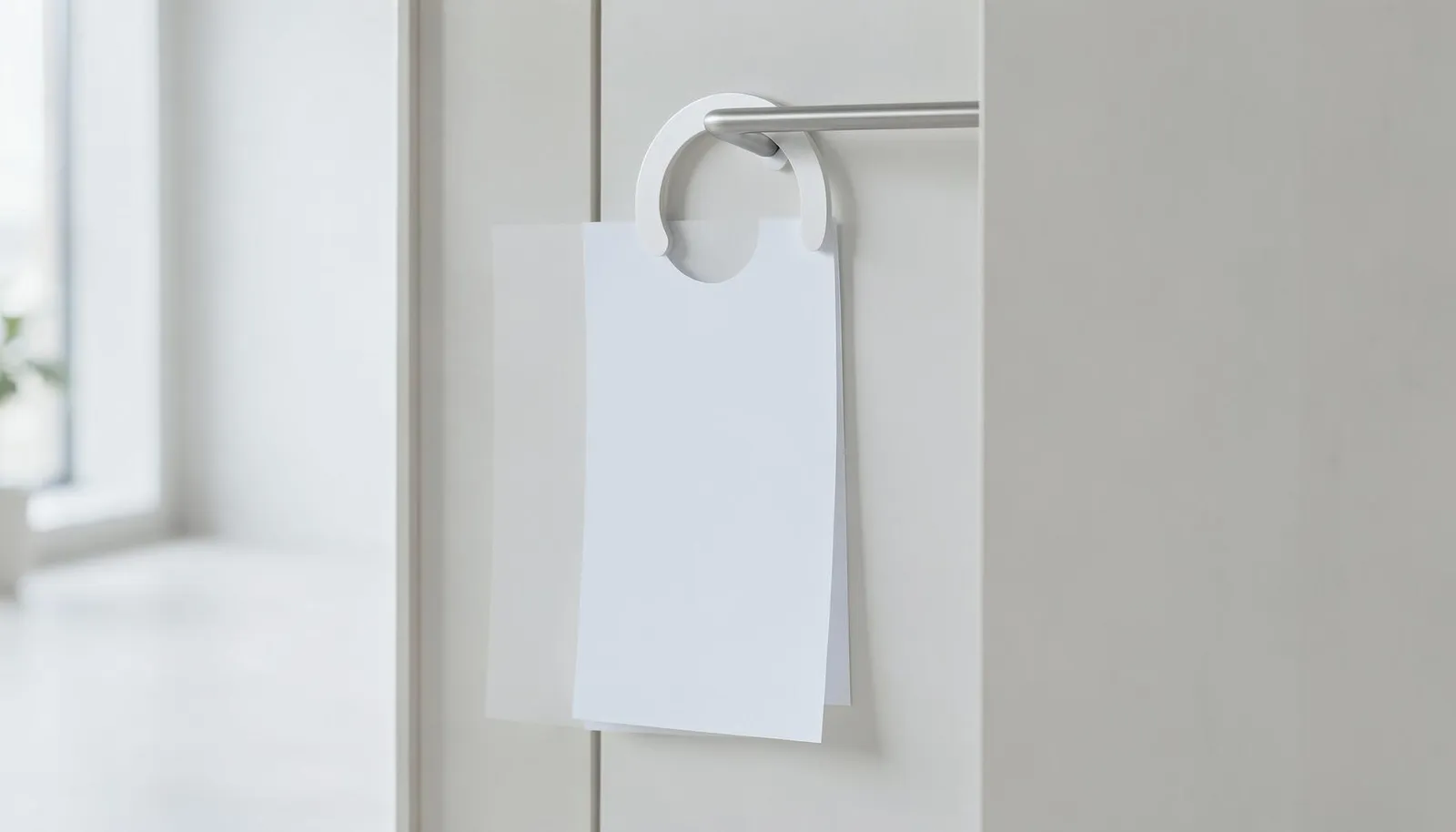
How does door hanger printing work?
Door hanger printing produces a die-cut card, typically 3.5x8.5 or 4.25x11 inches on 14-16PT card stock, with a slot cut to slide over a door handle. Businesses hand-deliver them along a chosen route, no postage or mailing list required, unlike addressed direct mail.
That simplicity is part of the appeal. A realtor, dentist, or chiropractor can walk or drive a specific block, place a hanger on every door, and control exactly where the message lands. There’s no reliance on a carrier route or a purchased mailing list. The trade-off is labor: someone has to distribute them, whether that’s staff, a hired crew, or a door-to-door service in the target area.
Why do door hangers still work for local businesses?
Door hangers work because they target a physical location instead of a name on a list, which makes them useful for businesses whose customers are defined by geography rather than demographics. A new listing, a dental practice opening nearby, or a chiropractor expanding into a neighborhood all fit that model.
They also solve a problem that digital ads can’t: visibility at the exact moment someone walks up to their own front door. A hanger doesn’t compete with a crowded inbox or a scrolling feed. It’s a physical object a homeowner has to touch to get inside. For service businesses working a defined radius — think a 10-block area around a new office — that physical touchpoint still earns attention that purely digital local ads often miss.
“We see a lot of businesses treat door hangers as an afterthought to their other print,” says Manny Torres, CEO of 360 Print Studio. “But the ones that actually route them block by block, with one offer per hanger, get a completely different response than the ones that print a generic flyer and call it a door hanger.”
What are 7 creative door hanger campaign ideas for local businesses?
The strongest door hanger campaigns tie the message to a specific trigger — a new listing, a seasonal service, or a limited window — rather than a generic “we’re open” message. Below are seven approaches that work across real estate, dental, chiropractic, and general local business marketing.
1. New listing announcements for the surrounding streets
A realtor lists a home and distributes hangers to the 200-300 closest houses within a day or two, inviting neighbors to an open house before the public listing goes live. This pairs well with the farming strategies covered in building a farm mailing list that actually converts into listings.
2. Open house day-of reminders
Hangers placed the morning of an open house, combined with real estate yard signs at the corner and driveway, reinforce the same message across formats a driver and a walker will both see.
3. New patient welcome offers for dental and chiropractic practices
A practice opening in a plaza or new building can hand-deliver hangers to nearby homes and apartment complexes announcing new patient hours, with one clear call to action — a phone number or booking link, nothing else competing for attention.
4. Seasonal service reminders
HVAC tune-ups before summer, gutter cleaning before fall, or tax prep before April — door hangers timed to a season give homeowners a reason to act now instead of filing the message away.
5. “We missed you” leave-behinds
Service businesses that knock and get no answer can leave a hanger instead of a sticky note, keeping the interaction professional and branded rather than scrawled on paper.
6. Grand opening or relocation notices
New locations, especially retail or food service, can use hangers to tell the immediate neighborhood exactly where to find them, paired with a short-dated opening offer.
7. Referral and review requests for existing customers
A quieter but effective use: leaving a hanger at a completed job site thanking the customer and asking for a review, rather than mailing a separate piece later.
What design mistakes should you avoid with door hangers?
The most common mistake is designing a door hanger like a flyer — dense text, multiple offers, small type — when the format only earns a few seconds of attention before it’s read or tossed. One message, one visual anchor, and a clear next step outperform a cluttered layout.
Other recurring issues include:
- No clear call to action. A phone number buried in a paragraph gets missed; a number in large type near the bottom gets called.
- Ignoring the slot placement. The die-cut slot needs to sit where it won’t cut through your headline or logo — plan the layout around it, not after it.
- Skipping a second language option. In many neighborhoods, a bilingual hanger reaches more households than an English-only piece.
- Printing on stock too thin to survive weather. A hanger left on a door overnight needs to hold its shape; 16PT card stock with a coated finish resists curling and moisture far better than standard paper.
- Forgetting local regulations. Some municipalities and HOAs restrict unsolicited door-to-door materials, so it’s worth checking local rules before a large distribution run, similar to guidance the U.S. Small Business Administration provides on local marketing compliance.
What’s the best size and card stock for door hangers?
The right size and stock depend on how much information the hanger needs to carry and how it will be distributed. A simple announcement works fine at a smaller size and lighter stock, while a detailed offer or a coupon insert benefits from a larger format and heavier card stock.
| Size | Card Stock | Finish | Best For |
|---|---|---|---|
| 3.5x8.5 in | 14PT | Matte | Quick announcements, grand openings |
| 4.25x11 in | 16PT | Gloss or matte | Open houses, detailed offers with tear-off coupon |
| 4.25x11 in | 16PT | UV coated | Outdoor-exposed routes, longer distribution windows |
For most campaigns, 16PT card stock is the standard choice — it’s sturdy enough to hang cleanly without bending at the slot and substantial enough that it doesn’t feel disposable the moment it’s picked up. You can see current size, stock, and finish options on the door hangers page.
How do you plan a door hanger campaign?
A door hanger campaign works best when the route, message, and timing are decided before anything goes to print, not after. Mapping the distribution area first prevents ordering the wrong quantity or finishing the run too late for the event it supports.
A simple planning checklist:
- Define the route. Map the exact streets or buildings, and count households to set your print quantity.
- Pick one message. Choose a single offer, announcement, or call to action — resist adding a second promotion.
- Choose size and stock. Match the format to the message length, using 16PT card stock for anything distributed over multiple days.
- Set the delivery date. Build in time for printing and distribution before the event or deadline the hanger references.
- Decide who delivers. Staff, a hired team, or a professional distribution service — confirm capacity before the print date.
- Track response. Use a dedicated phone number, QR code, or promo code so you know which route and message performed.
- Pair with another format if useful. Realtors often combine hangers with postcards for realtors or yard signs for the same listing.
Door hanger printing is one of the few local marketing formats that puts your message directly in a customer’s hand at their own front door, without a mailing list or postage cost. Whether you’re a realtor working a listing, a dental or chiropractic practice opening in a new neighborhood, or a print shop or agency producing campaigns for clients, the format rewards a clear offer and a well-planned route more than any clever design trick.
If you’re ready to put a campaign together, explore custom door hangers or browse the full range of local marketing formats in our products catalog to pair hangers with postcards, yard signs, or flyers for the same campaign.
Ready to order premium Custom Door Hangers?
Get instant pricing →Frequently Asked Questions
What size are most door hangers printed?
Most door hanger printing runs 3.5x8.5 inches or 4.25x11 inches, with a die-cut slot sized to fit over a standard door handle or knob without tape or staples.
What card stock works best for door hangers?
16PT card stock with a gloss or matte coating is the standard choice because it holds up to handling and brief outdoor exposure better than thinner paper stock.
Are door hangers more effective than mailed postcards?
Each has a different job. Door hangers work well for hyper-local, walkable routes, while postcards reach a wider radius through the mail. Many businesses use both.
Can realtors use door hangers for open houses?
Yes. Real estate door hangers are commonly used for open house announcements, just-listed updates, and neighborhood farming campaigns in a specific subdivision or street.
How many door hangers should a small business order?
Campaign size depends on the neighborhood, but many local businesses start with runs in the low thousands to cover a defined route and leave room for repeat passes.
Do door hangers require a mailing permit?
No. Door hangers are typically hand-delivered or placed directly on doors, not mailed, so they don't require postage or USPS mailing permits like postcards do.
What's the biggest mistake businesses make with door hanger design?
Cramming too much text onto one side. A door hanger gets a few seconds of attention, so the strongest campaigns lead with one clear offer or message.