When No One Wants the Family Print Shop: A Commercial Printing Exit Strategy That Protects Your Clients
By 360 Print Studio · August 6, 2026
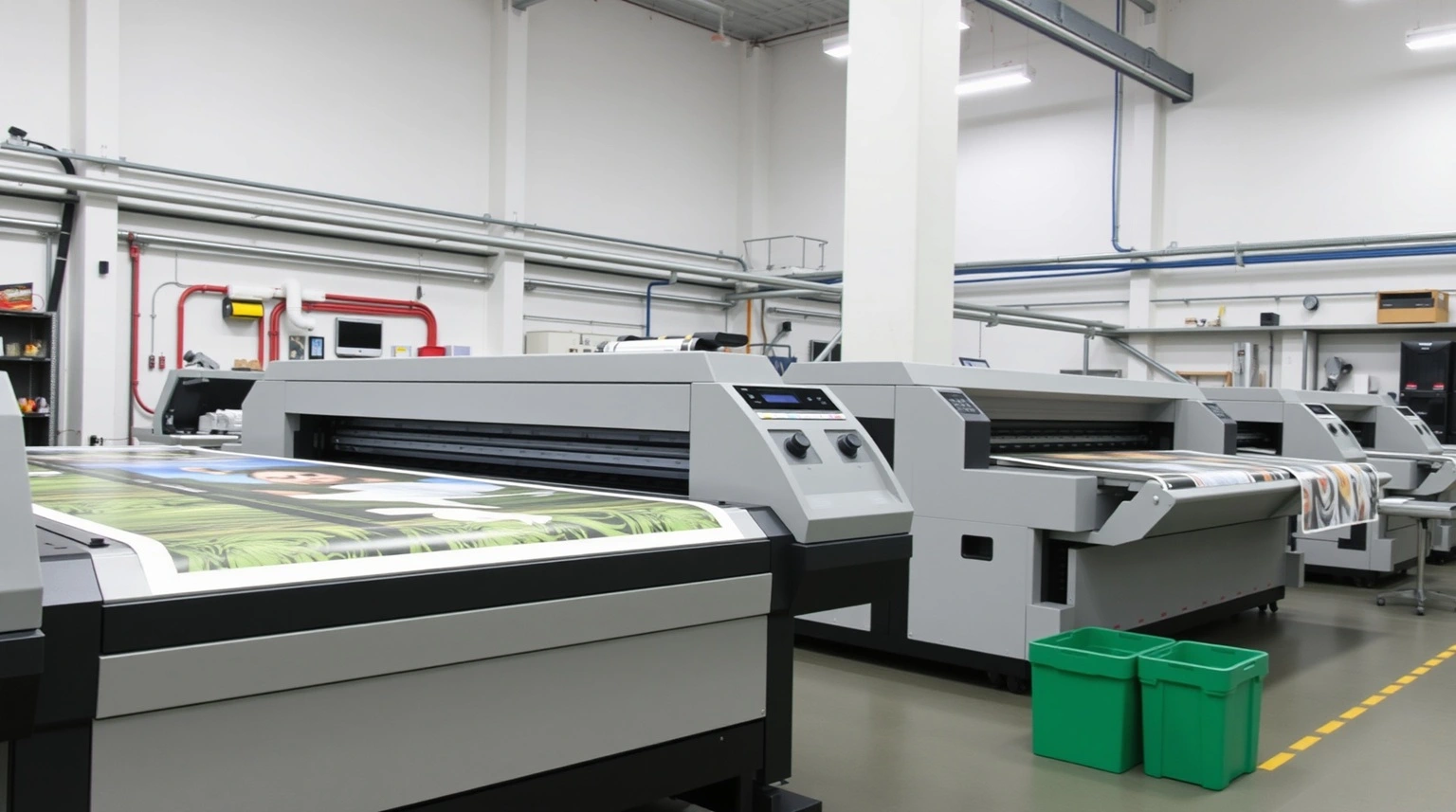
Family print shop owners who are approaching retirement can protect their clients and preserve their brand by transitioning to a white-label commercial printing partnership—without selling the business cheap, shutting down, or investing in new equipment. The right trade printer handles production, technology, and fulfillment behind the scenes while the owner retains client relationships and continues earning revenue on their own terms.
What Is the Reality Facing Family-Owned Print Shops Right Now?
The numbers are difficult to ignore. Roughly 60% of printing companies are family businesses, many still led by first- or second-generation owners. The workforce is aging—the mean age for printers sits near 47.9 years, with most shop workers between 45 and 64. That demographic reality is creating a retirement wave at the same moment that client expectations are shifting most rapidly toward digital ordering and integrated marketing services.
Succession is the industry’s open wound. Only about 30% of family businesses survive to the second generation, 12% reach the third, and fewer than 3% go beyond that. In the printing sector specifically, absent or unplanned succession is consistently flagged as a top operational risk. For many owners, the honest answer is: no one in the family wants the shop, and finding a qualified buyer at a fair price is harder than it looks.
That leaves a gap between “keep grinding” and “close the doors”—and most owners don’t realize there’s a third path.
Why Is “Keeping Going as Usual” Getting Harder?
Legacy print shops aren’t failing because their owners made bad decisions. They’re being outpaced by structural shifts that reward automation, digital integration, and broader service menus.
According to strategic research from the print industry, 87% of print providers say automation increases business resilience, with adopters reporting higher productivity, fewer errors, and stronger staff retention. Facilities using automated prepress workflows report roughly 34% efficiency gains and 67% fewer color correction cycles. AI-enabled predictive maintenance is cutting equipment downtime by over 20%.
The gap widens when you look at barriers. Around 58% of mid-size and legacy printers cite legacy system integration as their primary blocker to digital adoption, while 72% report talent shortages that make it nearly impossible to train staff on new platforms—even when the will is there.
Meanwhile, AI adoption trends in printing for 2025 confirm that digital-native competitors are compressing turnaround times and automating quote-to-ship workflows that legacy shops still process manually via phone and email. Industry forecasts project that by 2030, around 80% of print revenue will flow through digital channels.
For a shop running 25-year-old equipment and older printing software, that’s not a distant threat—it’s arriving now, one lost client at a time.
What Do Today’s Print Buyers Actually Expect?
The younger marketing managers and business owners who are increasingly controlling print budgets grew up with e-commerce. They expect:
- Instant online quotes without waiting for a callback
- Self-service ordering with digital proofing and approval workflows
- Integrated design support or at minimum, template-based tools
- Fast, reliable fulfillment with tracking visibility
A print shop running on phone estimates and manual re-keying isn’t just inconvenient to these buyers—it feels unreliable. Clients don’t always say they’re leaving because your quoting process is slow; they just quietly move their spend to a vendor with a smoother online experience.
This matters especially at thin margins. Print shops operating at 1–3% net profit can’t absorb the cost of manual order errors, re-keying delays, or disconnected systems. Every inefficiency compounds.
How Can a Commercial Printing Partner Help You Retire Without Abandoning Your Clients?
This is the question most owners haven’t thought to ask, because the answer isn’t obvious. A structured commercial printing partnership—where a trade printer handles production and technology under your brand—creates a functional succession plan without requiring a sale, a merger, or a family member willing to step in.
Here’s how it works in practice:
White-Label Production and Fulfillment
You keep the client relationship, the brand, and the margin. Your partner handles presswork, finishing, and shipping. Every order goes out under your name. Clients experience no disruption. For owners ready to step back from daily production, this removes the heaviest operational burden immediately.
Outsourced and managed print models consistently reduce overall production costs by up to 30% for organizations that make the transition—and they eliminate the ongoing capital expenditure of maintaining aging equipment. That alone can change the economics of staying in business.
Explore the full range of production capabilities available through 360 Print Studio’s partner program, from standard runs to premium formats including work on 16PT card stock, our benchmark for business cards and premium marketing collateral that demands a substantial, high-quality feel.
Legacy Software Integration Without a Full Replacement
One of the biggest fears for long-tenured owners is being told they need to rip out 25 years of systems and start over. A capable printing software integration approach doesn’t work that way. Modern web-to-print and automation layers can connect with existing MIS and estimating tools, surfacing online quoting and ordering for clients without dismantling the backend that already works.
This directly addresses the 58% of mid-size printers who name legacy integration as their top modernization barrier. You don’t have to choose between keeping your systems and keeping your clients happy—both are achievable simultaneously.
White-Label Marketing Services for You and Your Clients
Here’s the opportunity most retiring shop owners overlook: the transition to a production partner doesn’t just maintain revenue, it can expand it.
The white-label marketing services sector is projected to reach nearly $100 billion by 2026. Businesses that offer outsourced marketing services under their own brand report 42% higher client retention and significantly faster revenue growth than those limited to a single service category.
As a printing reseller working with the right partner, you can offer your business clients design, campaign management, and local marketing services—all delivered under your brand by your production partner. Your shop becomes a full-service local marketing resource, not a commodity printer fighting on price alone.
What Does the Transition Model Actually Look Like?
| Element | Owner’s Role | Partner’s Role |
|---|---|---|
| Client relationships | Retained fully by owner | None—invisible to clients |
| Brand on all materials | Owner’s brand throughout | White-labeled fulfillment |
| Production & finishing | Handed off entirely | Managed by partner |
| Technology & software | Maintained or upgraded | Integrated or built to fit |
| Marketing services | Offered to clients | Delivered under your brand |
| Capital expenditure | Eliminated | Absorbed by partner |
| Daily operational grind | Dramatically reduced | Absorbed by partner |
This model gives owners something they rarely get: a dignified, structured path to reduced hours and eventual full retirement, without a fire sale of the business or an abrupt shutdown that strands long-term clients.
How Do You Start Moving in This Direction?
The first step is honest assessment. Review your current production volume, your client list, and which services your clients are actually buying versus requesting that you can’t deliver. That gap—between what clients want and what your current setup provides—is the starting point for a partnership conversation.
From there, a wholesale printing partner relationship begins with production outsourcing: you send jobs, they fulfill, you maintain the client experience. As the model stabilizes, you layer in technology integration and marketing services. Revenue share or margin structures vary, but the fundamental logic is consistent—you capture value from the client relationship you’ve built over decades without carrying the operational weight of running presses and managing software updates.
You’ve spent more than 25 years earning your clients’ trust. That trust has real value, and it doesn’t have to disappear because no one in the family wants to inherit the equipment. See how 360 Print Studio’s partner program works to understand what a production partnership can actually deliver—then consider what your clients would gain if you offered it under your name.
According to emerging 2026 print production trends, the shops that will thrive through this industry transition aren’t necessarily the ones with the newest presses—they’re the ones with the strongest client relationships and the operational flexibility to deliver what clients need. That description fits most long-tenured family shop owners better than they realize.
You don’t have to choose between burning out and shutting down. The presses, the platforms, and the production can be handled. Your job—if you want to keep it—is the relationship work you’ve always been best at.
Ready to order premium ?
Get instant pricing →Frequently Asked Questions
Can I keep my client relationships if I outsource production to a trade printer?
Yes. A white-label commercial printing partnership means all orders are fulfilled and shipped under your brand. Your clients never see a change in the experience, while you step back from daily production entirely.
What is a printing reseller model and how does it work for retiring shop owners?
A printing reseller model lets you act as the client-facing business while a production partner handles manufacturing, finishing, and fulfillment. You set your own margins, keep your brand, and eliminate equipment and staffing overhead.
How can a family print shop add services without hiring new staff?
By partnering with a trade printer that also offers white-label marketing services—including design and campaign management—you can expand your offering to clients without adding headcount or internal expertise.
What is web-to-print and why do print shop clients expect it?
Web-to-print is an online ordering system that lets clients configure, proof, and order print products digitally. Industry forecasts suggest that by 2030 around 80% of print revenue will flow through digital channels, making it an essential capability for client retention.
Do I need to replace all my existing software to modernize my print shop?
No. Modern commercial printing partnerships can layer web-to-print and automation tools on top of your existing MIS or estimating software, avoiding a full system replacement and protecting your historical data and workflows.
How does outsourcing commercial printing production affect profitability?
Organizations that shift to outsourced or managed print models can reduce overall print spend by up to 30% while eliminating in-house equipment, staffing, and maintenance costs—often improving net margins even as production volume is handed off.
What happens to my brand if I transition to a wholesale printing partner?
Nothing changes from your clients' perspective. A reputable wholesale printing or trade printer partner fulfills every order under your brand name, with your logo on packing slips and packaging, preserving the trust you've built over decades.