How to Use Flyers for Local Marketing (A Complete Guide)
By Manny Torres · May 6, 2026
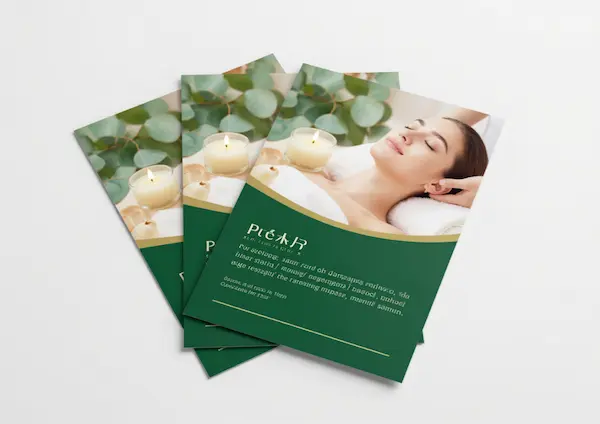
Flyers are the original local marketing medium — and they still work. While digital marketing has become more competitive and expensive, physical flyers in the right hands or on the right wall generate real responses from real customers in your actual service area.
This guide covers everything you need to know to make flyers a genuinely effective part of your local marketing strategy.
Why Flyers Work in 2026
Digital marketing saturation has made physical marketing more valuable, not less. The average person sees 5,000+ digital ads per day and has developed effective filtering for them. A well-designed flyer in someone’s hands — or on the bulletin board at their gym — experiences far less competition.
For local businesses, flyers offer specific advantages:
- Geographic precision — You choose exactly where they go; no algorithmic targeting required
- Tangible — Can be kept, referred to, posted on a refrigerator
- No ad blocker — Distributed flyers reach your audience without platform friction
- Cost-effective at scale — 1,000 professionally printed flyers often cost less than a week of modest Google Ads spend
The key is treating flyers as a serious marketing investment — not an afterthought printed in the office on copy paper.
Choosing the Right Flyer Size
| Size | Best Use |
|---|---|
| 8.5×11 | Standard marketing flyer; maximum space; fits all racks |
| 5.5×8.5 | Half-sheet; economical; good for events and promotions |
| 4×9 | Door hangers and narrow rack placement |
| 8.5×14 | Legal size; high-impact; uncommon but distinctive |
For most local marketing campaigns, 8.5×11 is the right choice. It’s the format audiences expect, can be read from a distance, and gives you the space to include imagery, key messaging, and contact information without crowding.
If you’re running a targeted door-hanger campaign or want a more compact piece for table tents, 5.5×8.5 (half-sheet) is cost-effective and practical.
Designing a Flyer That Gets Read
Most flyers fail because they try to communicate too much. A flyer is not a website or a brochure — it’s a single focused message with a single action.
The essential elements:
Headline (above the fold) — Your headline is the most important element. It should address a specific need or desire of your target audience. “Need a plumber today? Same-day service in [City]” outperforms “Smith Plumbing Services — We’ve Been Here Since 1987.”
Visual anchor — A strong image, graphic, or color block that draws the eye. For service businesses, a before/after photo is highly effective. For events, a bold graphic treatment works well.
Key benefit — Three to five bullet points explaining what the reader gets. Focus on outcomes, not features.
Contact information — Phone number in a size that can be read from a foot away. Website or QR code for digital follow-up.
Call to action — What do you want them to do right now? “Call for a free quote,” “Scan to book online,” “Mention this flyer for 15% off your first order.”
What to leave out — Your company history. Your mission statement. Detailed pricing for more than 2–3 items. Anything that’s interesting to you but not to the customer.
Paper and Finish Choices
When you order flyers from 360 Print Studio, these are the decisions that affect how your flyer looks and performs in the real world:
80lb gloss text — The standard for marketing flyers. Good color reproduction, feels professional, lightweight enough to distribute easily.
100lb gloss text — Heavier, more substantial, noticeably more premium. Worth the upgrade for campaigns where perceived quality matters.
Matte finish — Best for text-heavy flyers or when you want a sophisticated, non-glossy look. Colors appear slightly muted compared to gloss but the overall effect is premium.
UV coating — Maximum durability and visual impact. Colors appear ultra-saturated. Best for outdoor posting or any application where the flyer will be handled repeatedly.
For most local marketing campaigns, 80lb or 100lb gloss text is the right call. It’s cost-effective, looks professional, and holds up well under normal handling.
Flyer Distribution That Works
Printing great flyers is only half the equation. Distribution strategy determines whether they reach the right people.
Door-to-door in your service radius — Highly effective for home services, landscaping, cleaning, pest control, and similar businesses. Distribute within your preferred service area. Response rates of 2–5% are common for well-targeted campaigns.
Complementary business placement — Partner with businesses that serve the same customer but don’t compete. A personal trainer partners with a sports nutrition store. A wedding photographer partners with a florist. Leave a small stack of flyers at their counter.
Community bulletin boards — Libraries, coffee shops, gyms, laundromats, and community centers often have bulletin boards. Check rules for posting and refresh your flyers monthly.
Event handouts — Farmers markets, community events, trade shows, and local festivals. Handouts in context (people in buying mode at a market) have high engagement.
Direct mail inserts — Flyers inserted into envelopes for a targeted mailing campaign. Combines the precision of direct mail with the cost-efficiency of a flyer.
How Many Flyers to Order
Quantity depends on your distribution strategy:
- Single neighborhood (door-to-door): 500–1,000 per campaign
- Multi-neighborhood campaign: 2,500–5,000
- Event handout: 250–500 per event
- Business placement (multiple partners): 500–1,000 to seed locations
- Ongoing monthly campaigns: 1,000+ per month
The per-unit cost of professional printing drops significantly as quantity increases. Ordering 2,500 flyers typically costs only 30–40% more than ordering 500, giving you 5× the distribution reach.
Measuring Flyer Campaign Results
Tracking your flyer ROI is straightforward with a few simple mechanisms:
Unique phone number — Use a call tracking number on flyers so you can attribute inbound calls directly to that campaign.
QR code — Link to a landing page specific to the campaign. Track traffic in Google Analytics.
Offer code — “Mention code FLYER24 for 10% off” gives you direct attribution when customers call or come in.
Ask every new customer — The simplest method. “How did you hear about us?” consistently surfaces flyer responses that might otherwise go unmeasured.
Order your next batch of flyers from 360 Print Studio — professional quality, multiple finish options, and fast delivery across the US and Canada.
Ready to order premium flyers?
Get instant pricing →Frequently Asked Questions
What size flyer works best for local marketing?
8.5×11 is the standard and most versatile flyer size. It's recognizable, easy to read from a distance, and fits standard display racks and bulletin boards. For door hangers or more compact distribution, 4×9 or 5.5×8.5 work well.
How much does it cost to print 1,000 flyers?
Professional full-color flyers on quality stock for 1,000 units typically range from $80–$200 depending on paper weight, finish, and size. The per-unit cost drops significantly at higher quantities.
How do I distribute flyers effectively?
The most effective methods depend on your business type: door-to-door in your target neighborhood, placement in complementary businesses (gym → protein shop → sports equipment store), community bulletin boards, and event handouts. Door-to-door distribution in a defined radius achieves 2–5% response rates for local service businesses.
Should flyers be single or double sided?
Double-sided is almost always worth it. The back of the flyer is a marketing opportunity you've already paid for in production. Use the front for the primary message and the back for additional details, testimonials, or a map/directions.
What finish should I choose for flyers?
Gloss finish is the most popular for high-impact visuals and photography. Matte is preferred for text-heavy flyers and has a more sophisticated look. UV coating adds the most durability and visual punch for premium campaigns.